


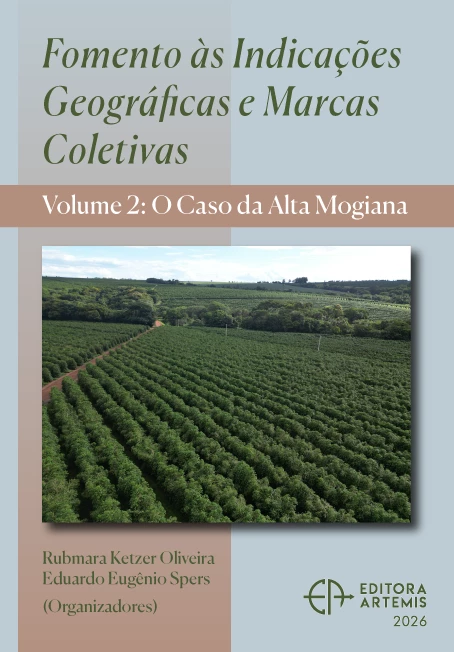
TERRITÓRIO, QUALIDADE E REPUTAÇÃO: A INDICAÇÃO GEOGRÁFICA DA ALTA MOGIANA
A Indicação Geográfica (IG) constitui um instrumento de diferenciação que vincula produtos ao território de origem e fortalece sua reputação junto ao mercado. No caso da cafeicultura brasileira, a Alta Mogiana consolidou-se como uma das principais regiões produtoras de cafés especiais em razão das condições naturais favoráveis ao cultivo, da tradição cafeeira e da organização de seus produtores. Este capítulo discute os elementos que sustentam a reputação da Indicação Geográfica da Alta Mogiana, apresentando a trajetória da cafeicultura na região, as características edafoclimáticas responsáveis pela qualidade do café, o ambiente institucional que regulamenta a certificação e as formas de cooperação estabelecidas entre produtores, cooperativas e associações. Também são discutidas evidências sobre a influência da origem na percepção dos consumidores, destacando a Indicação Geográfica como um sinal de procedência que reduz a incerteza sobre a qualidade do produto e favorece sua diferenciação no mercado. A análise demonstra que a reputação da Alta Mogiana resulta da convergência entre fatores territoriais, institucionais e mercadológicos, conferindo reconhecimento à região e ampliando o valor percebido dos cafés produzidos sob sua Indicação Geográfica.
TERRITÓRIO, QUALIDADE E REPUTAÇÃO: A INDICAÇÃO GEOGRÁFICA DA ALTA MOGIANA
-
DOI: 10.37572/EdArt_0608261785
-
Palavras-chave: Indicação Geográfica; Alta Mogiana; café especial; território; origem.
-
Keywords: Geographical Indication; Alta Mogiana; specialty coffee; territory; origin.
-
Abstract:
Geographical Indications (GIs) are a differentiation mechanism that links products to their place of origin and strengthens their reputation in the marketplace. Within Brazilian coffee production, the Alta Mogiana region has established itself as one of the country’s leading producers of specialty coffees due to its favorable natural conditions, longstanding coffee-growing tradition, and the organization of its producers. This chapter examines the factors that underpin the reputation of the Alta Mogiana Geographical Indication by discussing the historical development of coffee cultivation in the region, the edaphoclimatic conditions that shape coffee quality, the institutional environment governing GI certification, and the cooperative relationships among producers, associations, and cooperatives. The chapter also reviews evidence on the influence of product origin on consumer perception, highlighting the Geographical Indication as a signal of provenance that reduces uncertainty regarding product quality and enhances market differentiation. The analysis shows that the reputation of Alta Mogiana emerges from the convergence of territorial, institutional, and market-related factors, strengthening the region’s recognition and increasing the perceived value of coffees produced under its Geographical Indication.
- Breno Rodrigues Acacio
- Eduardo Eugênio Spers